19 October 2026
Field notes: the week the crane exclusion zone shrank by a skip
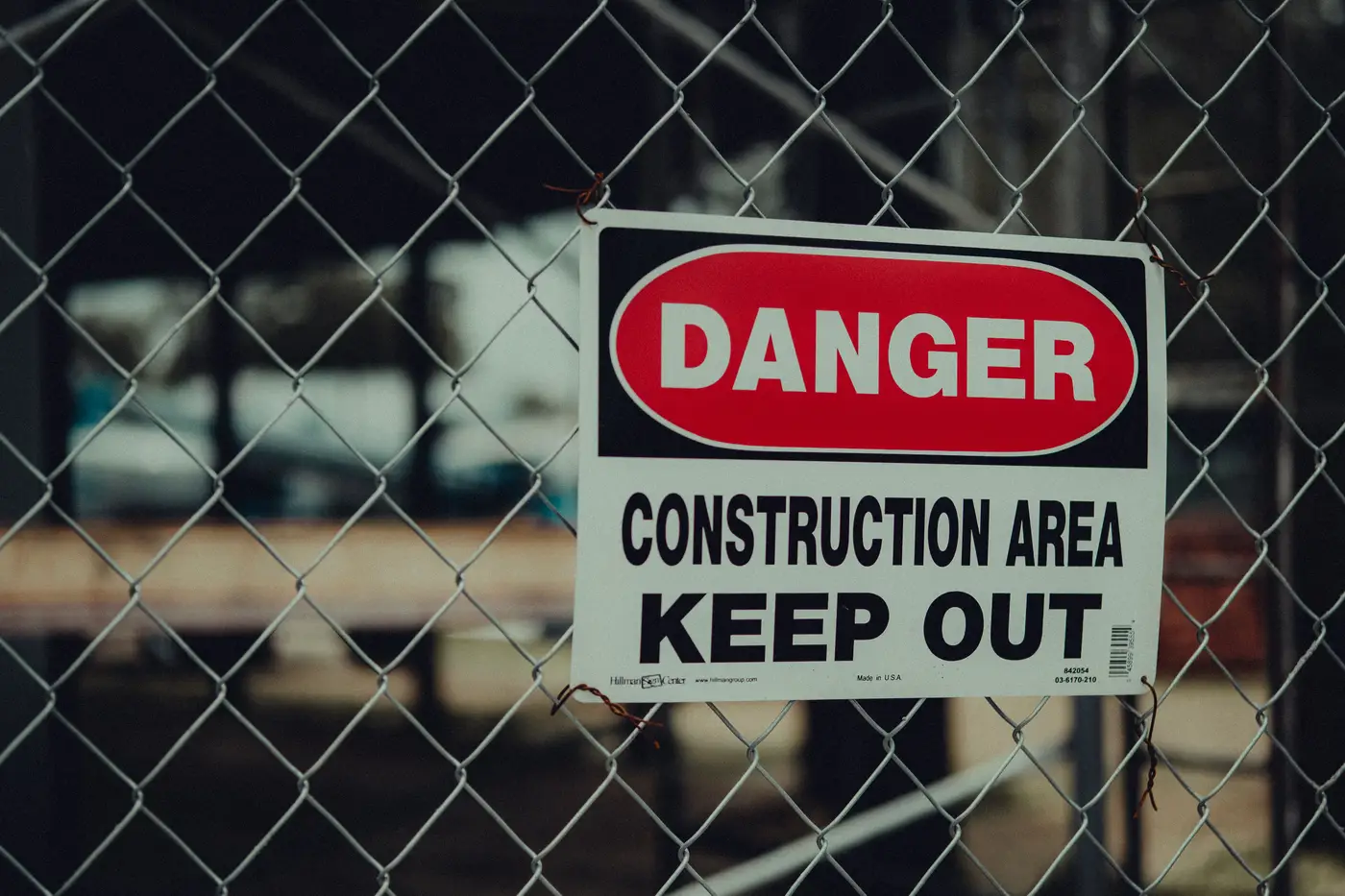
There's a particular way a crane exclusion zone dies. It doesn't get redrawn in a meeting. It doesn't show up as a variation on the logistics plan. It just gets smaller, one delivery at a time, until the line on the plan and the line on the ground stop agreeing with each other.
I watched this happen over about three weeks on a job where the tower crane sat hard against the north boundary, with a laydown strip and a skip run along the hoarding. The exclusion radius on paper gave a clean two metres of standoff past the skip line. Nobody argued with that drawing. Everyone on site had seen it in the induction.
Week one, a muck-away skip went out for exchange and came back on a slightly different day than scheduled, so the empty bay sat there a bit longer than planned. A second skip came in for plasterboard offcuts and, rather than wait for the first to clear, the banksman had it dropped alongside. Nobody was wrong to do that. It kept the floor clear and kept trades moving. But now there were two skips where the plan drew one, and the gap between the skip run and the crane's slew path had halved without anyone deciding it should.
Week two, a pallet of board went down next to the second skip because that's where there was room. Week three, someone laid a run of temporary ply over the mud so the forklift could get past the pallet without churning the ground. At that point the "exclusion zone" was a shape nobody had drawn, sitting about a skip's width inside the one that was supposed to be there.
None of this was a single bad decision. It was six reasonable ones in a row, each one solving the problem in front of the person solving it, each one invisible from the ground unless you happened to be standing in exactly the right spot with the drawing in your hand. A walk-the-site routine struggles against this kind of drift. A weekly walk catches what's wrong on the day of the walk. It doesn't catch six small, correct-seeming decisions compounding between visits, because by the time you're standing there with a tape measure, the skip's already been there a fortnight and looks completely normal.
What actually surfaced it was an overhead pass that happened to catch the site twice, a fortnight apart, at a slight angle that made the shadow of the crane jib fall across the skip run in both frames. Lay them side by side and the shrinkage wasn't subtle at all. The second skip, the pallet, the ply run, all sitting inside what should have been dead ground. From above, the drift is obvious in a way it never is from the hoarding gate.
That's the thing about exclusion zones and laydown boundaries generally. They don't fail because someone decides to ignore them. They fail by accretion, by a site doing its job efficiently in the gaps between inspections, until the compliant version and the actual version have become two different drawings without anyone meaning it that way. Catching that takes something that reads the whole footprint often enough, and consistently enough, to stop six small moves in the same direction from adding up to a skip's worth of encroachment before anyone notices.
If that sounds like a familiar way to lose an argument with an HSE inspector, Site Logistics Audit is built around exactly this pattern: a weekly overhead read that flags laydown creep and access encroachment before it's a skip-and-a-half deep. Worth a look before your own exclusion zone finds its own way of shrinking.