2 November 2026
What is a swept path analysis, and why your site logistics plan needs one
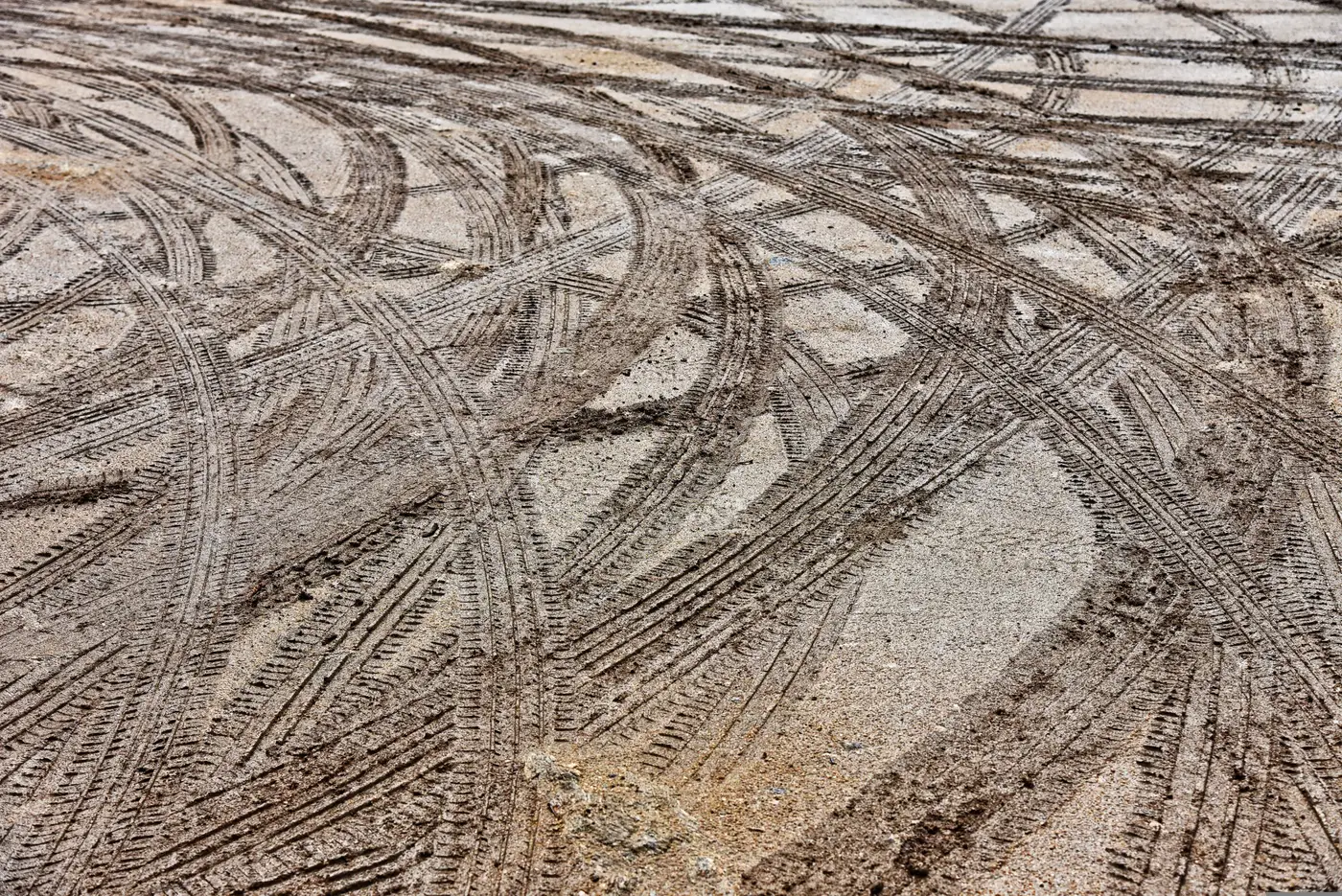
A swept path analysis is a drawing exercise, usually done before a single fence panel goes up. Someone runs a design vehicle, a 16.5m articulated lorry, a mobile crane, a concrete pump truck, through tracking software like AutoTrack or Vehicle Tracking, and the software plots the exact curve its wheels and body will follow through a turn. The output is a drawing showing whether that vehicle can get from the gate to the laydown area without mounting a kerb, clipping a scaffold return, or needing six shunts to make the corner.
It sounds like overkill until you've watched a 44-tonne low-loader try to reverse onto a site where the swept path was never checked against the as-built gate position. The turning circle on paper and the turning circle on a site with a new hoarding line, a parked welfare cabin, or a skip nobody logged are not always the same thing.
What the analysis is actually checking
Three things, mainly. First, can the vehicle physically make the turn without its body or trailer overrunning a kerb, verge, or building line. Second, does the swept path clear anything fixed, a lamp column, a crane outrigger pad, a retaining wall, that isn't going to move for the vehicle. Third, and this is the one that gets missed on tighter urban plots, whether the vehicle needs the full width of a two-way route to make the turn, which matters a lot if that route is also meant to carry pedestrian traffic or a second vehicle coming the other way.
For a site logistics plan, vehicle turning sets the whole layout: where the gate goes, which way the one-way loop runs, where a concrete pump can set up without blocking the only access route in or out. A crane and delivery vehicle access route that looks fine on a general arrangement drawing can fail a swept path check the moment someone adds a pedestrian route or a site cabin block in the wrong spot.
Where it breaks down once work starts
A swept path analysis is a snapshot. It answers the question for the layout that existed the day it was drawn. The problem is that laydown areas creep, hoarding gets repositioned for a phase change, and a materials stack that was supposed to be temporary is still sitting on the turning head three weeks later. None of that shows up by going back to the original CAD drawing, because the drawing was never wrong. The site just moved past it.
This is the gap most logistics managers actually live with: the swept path analysis was correct at handover, and nobody has re-checked the live site against it since. A banksman catches some of it in the moment, a near-miss catches the rest, and an incident report catches what's left. By the time a blocked access route or an encroaching stockpile shows up in a walk-round, the lorry that needed that route has often already come and gone, or worse, already had to improvise around it.
Re-walking the whole plan on foot, every week, to check the turning circles are still clear is the kind of task that gets skipped when the programme is busy, which is exactly when it matters most. A weekly overhead read against the approved layout on file catches the laydown creep, the parked plant on the turning head, and the missing barrier before the next delivery is the one that finds out the hard way.
What good practice actually looks like
Treat the swept path drawing as a baseline, not a one-off sign-off. Re-check it whenever the phasing changes, whenever a new design vehicle comes onto the programme (a bigger crane, a longer trailer), and on a set cadence regardless, because site conditions drift even when the plan doesn't change on paper. Keep the check simple: is the route still the width it was drawn to, is the turning head still clear, has anything fixed appeared where the swept path needs to be empty.
If your site logistics plan has a turning circle on it somewhere, it's worth finding out how long it's been since anyone checked that circle still matches the ground. Site Logistics Audit runs that check weekly from overhead, so the gap between the drawing and the site doesn't have to wait for a near-miss to get noticed.